Dark, dangerous asteroids found lurking near Earth

asteroid

“An infrared space telescope has spotted several very dark asteroids that have been lurking unseen near Earth’s orbit. Their obscurity and tilted orbits have kept them hidden from surveys designed to detect things that might hit our planet.

Called the Wide-Field Infrared Survey Explorer (WISE), the new NASA telescope launched on 14 December on a mission to map the entire sky at infrared wavelengths. It began its survey in mid-January.

In its first six weeks of observations, it has discovered 16 previously unknown asteroids with orbits close to Earth’s. Of these, 55 per cent reflect less than one-tenth of the sunlight that falls on them, which makes them difficult to spot with visible-light telescopes. One of these objects is as dark as fresh asphalt, reflecting less than 5 per cent of the light it receives.

Many of these dark asteroids have orbits that are steeply tilted relative to the plane in which all the planets and most asteroids orbit. This means telescopes surveying for asteroids may be missing many other objects with tilted orbits, because they spend most of their time looking in this plane.

Fortunately, the new objects are bright in infrared radiation, because they absorb a lot of sunlight and heat up. This makes them relatively easy for WISE to spot.”

Read more at New Scientist

Share and Enjoy:
  • Digg
  • Facebook
  • email
  • Live
  • Twitter
  • Google Bookmarks
  • del.icio.us
  • StumbleUpon
  • Yahoo! Buzz
  • Reddit

‘Near-Perfect’ Hydrophobic Surface Inspired By Spiders

“Engineering researchers have crafted a flat surface that refuses to get wet. Water droplets skitter across it like ball bearings tossed on ice.

The inspiration? Not wax. Not glass. Not even Teflon.

Instead, University of Florida engineers have achieved what they label in a new paper a “nearly perfect hydrophobic interface” by reproducing, on small bits of flat plastic, the shape and patterns of the minute hairs that grow on the bodies of spiders.

“They have short hairs and longer hairs, and they vary a lot. And that is what we mimic,” said Wolfgang Sigmund, a professor of materials science and engineering.

A paper about the surface, which works equally well with hot or cold water, appears in this month’s edition of the journal Langmuir.”

Read more at Science Daily

Share and Enjoy:
  • Digg
  • Facebook
  • email
  • Live
  • Twitter
  • Google Bookmarks
  • del.icio.us
  • StumbleUpon
  • Yahoo! Buzz
  • Reddit

Earth’s Magnetic Field Older Than Previously Thought

field

“Evidence for the existence of Earth’s magnetic field has been pushed back about 250 million years, new research suggests. The field may therefore be old enough to have shielded some of the planet’s earliest life from the sun’s most harmful cosmic radiation.

Earth’s magnetic field was born by 3.45 billion years ago, a team including researchers from the University of Rochester in New York and the University of KwaZulu-Natal in South Africa report in the March 5 issue of Science.

That date falls during life’s earliest stages of development, between the period when the Earth was pummeled by interplanetary debris and when the atmosphere filled with oxygen. Several earlier studies had suggested that a magnetic field is a necessary shield against deadly solar radiation that can strip away a planet’s atmosphere, evaporate water and snuff out life on its surface.”

Read more at Wired (thanks, ReliegiousMarie)

Share and Enjoy:
  • Digg
  • Facebook
  • email
  • Live
  • Twitter
  • Google Bookmarks
  • del.icio.us
  • StumbleUpon
  • Yahoo! Buzz
  • Reddit

The Mystery Of The Missing Gorilla from Bristol Museum

ape

“When the stuffed body of Alfred, a 7ft gorilla, disappeared from Bristol Museum in March 1956 it sparked one of the more unusual police investigations.

Alfred had been one of the prize attractions at Bristol Zoo during his 18 years in captivity. Such was his appeal that after his death in 1946 he was stuffed and mounted in a glass case at the museum.

Police appealed for information, scoured the local university campus and interviewed leaders of the student union in an attempt to find him, but to no avail. They suspected he may have been stolen by rival students.

For nearly three days there was no sign of Alfred, until Donald Boulton, the university caretaker, found him in a doctor’s waiting room.

But the mystery of who took Alfred and where he went has remained a mystery for more than 50 years.

Now, after the death of one of the culprits, Ron Morgan, 79, a former estate agent in Bristol, the secret behind the `escape’ from the museum has been revealed.”

Read more at The Telegraph (thanks, Tammy)

Share and Enjoy:
  • Digg
  • Facebook
  • email
  • Live
  • Twitter
  • Google Bookmarks
  • del.icio.us
  • StumbleUpon
  • Yahoo! Buzz
  • Reddit

Where Do Atheists Come From?

poster

“HERE’s a fact to flatter the unbelievers among you: the bright young things at the University of Oxford are among the most godless groups ever studied in the UK. Of 728 students surveyed in 2007, 48.9 per cent claimed not to believe in any god, with 49.6 per cent claiming no religious affiliation. And while a very small number of Britons typically label themselves as “atheist” or “agnostic” (most surveys put it at about 5 per cent), an astonishing 57.3 per cent of the Oxford sample did.

This may come as no surprise. After all, atheism is the natural stance of the educated and the informed, is it not? It is only to be expected that Oxford students should be wise to what their own professor Richard Dawkins calls “self-indulgent, thought-denying skyhookery” – and others call “faith”. The old Enlightenment caricature, it seems, is true after all: where Reason reigns, God retires.

Of course, things are never quite that simple. Within the sample, for instance, the postgraduates (that is, the even-better educated) were notably more religious than the undergraduates, in terms of both belief in God and self-description. Although the greater number of non-Europeans in the postgraduate population is almost certainly a significant factor here, evidence from elsewhere backs the idea that there is no straightforward relationship between atheism and education.”

Read more at New Scientist (thanks, Tiram)

Share and Enjoy:
  • Digg
  • Facebook
  • email
  • Live
  • Twitter
  • Google Bookmarks
  • del.icio.us
  • StumbleUpon
  • Yahoo! Buzz
  • Reddit

Asteroid Probably Did Kill The Dinosaurs

death

“The Cretaceous-Tertiary mass extinction, which wiped out the dinosaurs and more than half of species on Earth, was caused by an asteroid colliding with Earth and not massive volcanic activity, according to a comprehensive review of all the available evidence, published in the journal Science.

A panel of 41 international experts, including UK researchers from Imperial College London, the University of Cambridge, University College London and the Open University, reviewed 20 years’ worth of research to determine the cause of the Cretaceous-Tertiary (KT) extinction, which happened around 65 million years ago. The extinction wiped out more than half of all species on the planet, including the dinosaurs, bird-like pterosaurs and large marine reptiles, clearing the way for mammals to become the dominant species on Earth.”

Read more at Science Daily (thanks, ReliegiousMarie)

Share and Enjoy:
  • Digg
  • Facebook
  • email
  • Live
  • Twitter
  • Google Bookmarks
  • del.icio.us
  • StumbleUpon
  • Yahoo! Buzz
  • Reddit

Oldest Writing, And Oldest English Writing

eggshells

“COULD these lines etched into 60,000-year-old ostrich eggshells be the earliest signs of humans using graphic art to communicate?

Until recently, the first consistent evidence of symbolic communication came from the geometric shapes that appear alongside rock art all over the world, which date to 40,000 years ago (New Scientist, 20 February, p 30). Older finds, like the 75,000-year-old engraved ochre chunks from the Blombos cave in South Africa, have mostly been one-offs and difficult to tell apart from meaningless doodles.

The engraved ostrich eggshells may change that. Since 1999, Pierre-Jean Texier of the University of Bordeaux, France, and his colleagues have uncovered 270 fragments of shell at the Diepkloof Rock Shelter in the Western Cape, South Africa.”

Read more at New Scientist

And (possibly) in English:
english

“What is believed to be the first ever example of English written in a British church has been discovered. Problem is, no-one can read it.
The 500-year-old inscription was found on a wall in Salisbury Cathedral, Wiltshire, hidden behind a monument dedicated to an aristocrat.
The faded black lettering was discovered in January but experts have now asked for help from the public in a bid to make sense of the inscription.
Conservators came across the writing when they were preparing to clean a 350-year-old monument to Henry Hyde, a local aristocrat who was ‘martyred’ in the English Civil War for his support of King Charles I.
The text on the cathedral’s south aisle wall had been whitewashed over with lime, which is why it is hard to read.

Read more at the Daily Mail

Share and Enjoy:
  • Digg
  • Facebook
  • email
  • Live
  • Twitter
  • Google Bookmarks
  • del.icio.us
  • StumbleUpon
  • Yahoo! Buzz
  • Reddit

TED Talks: Experience Vs Memory

“Using examples from vacations to colonoscopies, Nobel laureate and founder of behavioral economics Daniel Kahneman reveals how our “experiencing selves” and our “remembering selves” perceive happiness differently. This new insight has profound implications for economics, public policy — and our own self-awareness.

TEDTalks is a daily video podcast of the best talks and performances from the TED Conference, where the world’s leading thinkers and doers give the talk of their lives in 18 minutes. Featured speakers have included Al Gore on climate change, Philippe Starck on design, Jill Bolte Taylor on observing her own stroke, Nicholas Negroponte on One Laptop per Child, Jane Goodall on chimpanzees, Bill Gates on malaria and mosquitoes, Pattie Maes on the “Sixth Sense” wearable tech, and “Lost” producer JJ Abrams on the allure of mystery. TED stands for Technology, Entertainment, Design, and TEDTalks cover these topics as well as science, business, development and the arts.”

Via GrrlScientist Blog

Share and Enjoy:
  • Digg
  • Facebook
  • email
  • Live
  • Twitter
  • Google Bookmarks
  • del.icio.us
  • StumbleUpon
  • Yahoo! Buzz
  • Reddit

The Big Libel – Buy Tickets Now!

gig

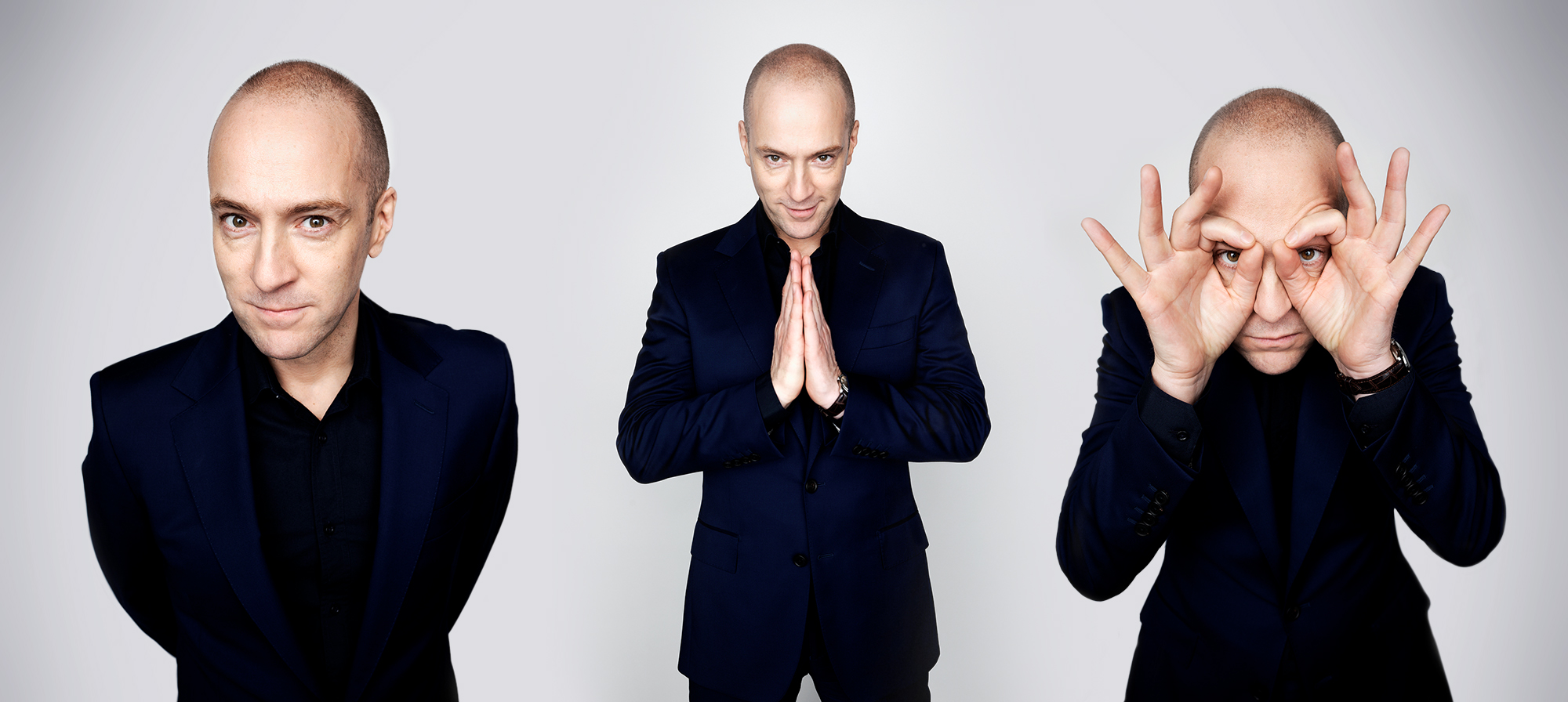
“The Big Libel Gig on Sunday 14 March 2010 at the London’s Palace Theatre will raise funds to support the Coalition for Libel Reform. An eclectic line-up, including Dara Ó Briain, Tim Minchin, Marcus Brigstocke, Robin Ince, Ed Byrne, Shappi Khorsandi, Professor Brian Cox, Simon Singh, Professor Richard Wiseman, Dr Peter Wilmshurst and Dr Ben Goldacre, is supporting the campaign for a public interest defence to protect writers, bloggers, academics, human rights activists and performers.

The Big Libel Gig is the brainchild of comedian Robin Ince – whose previous successes include the annual Nine Lessons and Carols for Godless People shows and who will be hosting the evening – and Simon Singh, the science author and broadcaster, who will be talking frankly about the impact of libel fears on scientific debate.

Simon Singh, who is currently being sued by the British Chiropractic Association, said: “Peter Wilmshurst, Ben Goldacre and I will talk about being sued for libel. Peter is being sued for raising concerns about a heart device. He faces bankruptcy by coming up against our draconian libel laws. We are all put at risk if doctors and scientists are scared to speak out because of English libel laws.”

Stars of the show will tell the audience that England’s unjust libel laws are preventing free speech and open criticism of big corporations and powerful institutions. They will call for others to support the campaign for a public interest defence and join them in signing the petition for libel reform at www.libelreform.org.”

Read more at LibelReform.org

Tickets here

Share and Enjoy:
  • Digg
  • Facebook
  • email
  • Live
  • Twitter
  • Google Bookmarks
  • del.icio.us
  • StumbleUpon
  • Yahoo! Buzz
  • Reddit

‘New’ Secret Ingredient that Makes Everything Taste Better?

umami

“You know about the four basic tastes: sweetness, sourness, bitterness and saltiness. Even if that list doesn’t roll off of your tongue, you can certainly imagine how each of these tastes flavors your mouth.

Well, it turns out there is fifth taste, called Umami. Umami was first isolated by Japanese chemists Kikunae Ikeda in 1908, yet only recently has the concept of umami made it out of Asia.

The chances are that you are already a big fan of umami but just don’t know it yet. That’s what happened to Carolyn Cope, who now runs a blog called Umami Girl.

‘I’d always known that I liked foods that were a little funky — certain aged cheeses, cured meats, mushrooms, anchovies,’ Cope told Asylum. ‘Shortly after college I got really into sushi. Like, really into it. Just when I was starting to seriously wonder whether my favorite sushi rolls were laced with some illicit, addictive substance, I learned about umami, the taste that literally stimulates the brain’s pleasure centers.’”

Read more at Asylum

Share and Enjoy:
  • Digg
  • Facebook
  • email
  • Live
  • Twitter
  • Google Bookmarks
  • del.icio.us
  • StumbleUpon
  • Yahoo! Buzz
  • Reddit